

Identify a problem you have or something you’re curious about:

I don’t know enough about the people in our neighborhood.
Turn it into a question:
What prevents my neighbors from being able to afford food?
Pete navigates to the website nvidetroit.org, and clicks on Get Data
Pete finds a map that allows him to look at a geography that covers his neighborhood.
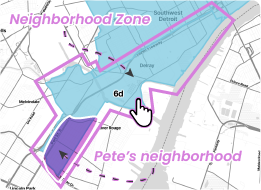
Pete finds that only 48% of residents are able to purchase adequate food. He keeps digging for other indicators that might help him understand the situation and finds that:

As Pete scrolls through the NVI website, he sees some interesting facts about his community:
Pete starts thinking about the lack of transportation and feelings of safety in the neighborhood. Pete starts to plan out a food delivery program with a paper sign up and writes a grant for a pilot phase to see if the food pantry can serve more people by bringing food to their doors.
How can we create a food delivery program?

Pete also notices a deep dive section on the NVI website, so he requests an account. He finds residents are least satisfied with their access to fresh healthy foods and mental health services.
He brings this datapoint to a convening of food sovereignty organizations in the city to kick start a conversation about how to better serve Detroit neighborhoods.